
"seed drying"
4000 article(s) found

Washed or dry? The relationship between the handling method and the level name
The coffee beans baked by us as ingredients are actually the seeds in the coffee fruit. Coffee farmers give the fruit another name, coffee cherry (Coffee Cherry). If the pulp is separated from the seed, and how to dry the seed into a state that is easy to preserve, the whole process is collectively referred to as treatment. Due to the effect of the treatment process on the quality and flavor of coffee beans

Introduction to the basic concept of raw beans small beans are not good.
Douxiao doesn't look good. Grading: the seeds are taken out and then screened and graded. Guatemala, Costa Rica and other countries are rated according to the planting height, more than 4500 feet above sea level is the highest "extremely hard bean" (SHB). Colombia, Kenya and New Guinea are graded by particle size, with larger and higher grades (with the exception of Kenyan beans). In addition, there are some producing countries in accordance with the defects.

Comprehensive data of Chinese Coffee Yunnan Simao small seed Coffee
Coffee is an advantageous and characteristic industry in the hot area of our city, and it is also one of the main agricultural products that our city exports to earn foreign exchange. In order to standardize the production technology, product standards and marketing behavior of coffee industry in our city, and improve the standardization level of coffee industry, the comprehensive standard of Pu'er small seed coffee was compiled according to the requirements of GB/T1.1 and GB/T1.2. This section defines the terms and definitions in the initial processing of small seed coffee.
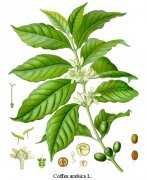
Coffee cultivation techniques detailed explanation of planting knowledge of Coffee trees
Coffee, cocoa and tea are called the three major beverages in the world, and their output, consumption and output value all rank first. In addition to being used as a beverage, coffee can also extract caffeine and coffee oil; in medicine, it can be used as an anesthetic, stimulant and diuretic cardiotonic agent. Coffee pulp can be used to make wine, vinegar, pectin and molasses; dried pulp can be used as animal feed; dried fruit shell can be used as fertilizer and burning
Boutique Coffee Science talk about Coffee Fruit
The fruit is a berry, also known as comb fruit. Oval, 9-14 mm long, young fruit green, red at maturity, purplish red. Each fruit generally has two seeds, but also one or three, showing a semi-oval, there is a longitudinal groove, called grooves. The structure of a fruit in which the exocarp consists of a thin layer of hardwood human cells with stomata; the mesocarp (that is, pulp) is large and Lignified by several layers of polygons.
The whole process of planting and growth of coffee beans
Common questions about coffee bean cultivation: first, what are coffee kernels? How did you get the coffee seeds? Coffee seed, commonly known as coffee shell dried bean, is a kind of coffee seed without removing mesocarp and silver skin. Coffee seed is divided into Arabica Arabica seed and Robusta Robasta seed. The picture shows the commercial coffee raw bean available for consumption, and it is also the two major commercial plants on a large scale.
Cultivation and cultivation of High-quality Coffee
(1) Seedling propagation Coffee seedling propagation can be divided into seed propagation and asexual reproduction. 1. Seed propagation (1) seed collection, seed washing and seed storage during the full ripening period of coffee (the full ripening period of medium-grain coffee in Hainan Island is from February to March, and that of small seed is from September to November). The fully ripe fruits are picked from strong and high-yielding mother trees to make seeds. Immediately after the fruit is harvested, peel and wash the seeds. The method is to place the fruit.

Cultivation techniques of Coffee Tree Seedling Propagation and Establishment of Coffee Garden
(1) Seedling propagation Coffee seedling propagation can be divided into seed propagation and asexual reproduction. 1. Seed propagation (1) seed collection, seed washing and seed storage during the full ripening period of coffee (the full ripening period of medium-grain coffee in Hainan Island is from February to March, and that of small seed is from September to November). The fully ripe fruits are picked from strong and high-yielding mother trees to make seeds. After the fruit is harvested, peel and wash the seeds immediately. The method is to remove the fruit.

Where does the sweetness of coffee come from? why is sun treatment sweeter than washing?
Sun-treated coffee is usually sweeter and more mellow than water-washed coffee and usually has a unique fruity flavor. Intuitively, the sweetness, taste and flavor of sun-treated coffee should come from prolonged contact with the sugary, sticky pulp of coffee fruit, but is there any evidence to prove it? If not, what will happen? Is natural coffee high in sugar? Coffee beans

A brief discussion on the perennial evergreen shrubs of the genus Coffee
1. Summary: coffee is a perennial evergreen shrub or small tree of Rubiaceae. It is native to tropical Africa and has been cultivated for more than 2000 years. The Arabs began to grow coffee in 525 BC, and it was popular for Arabs to stir-fry coffee beans. They began to grow coffee beans on a large scale after the 15th century, and were widely distributed in the tropics and subtropics of Europe, Asia, Africa and Latin America after the 18th century.

The sun? Washing? Honey treatment? What exactly are you talking about when you are talking about the handling of coffee beans?
The exchange of professional baristas please follow the coffee workshop (Wechat official account cafe_style) 1. Coffee fruit can be divided into six layers from outside to inside, namely, outer skin, pulp, gum, parchment, silver and seeds. The difference of different treatment methods lies in the different methods of removing the outer coating of beans; 2, dry treatment 3, no layer is removed, the whole beans are directly dried and exposed to sunlight.
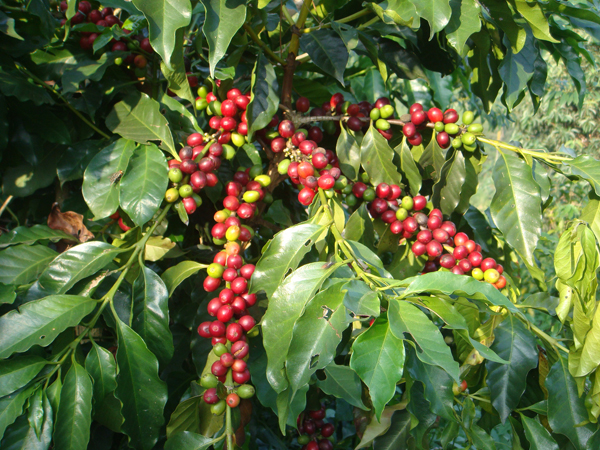
Explain the planting and cultivation of coffee trees in detail to understand the growth environment and needs of coffee trees.
(1) Seedling propagation Coffee seedling propagation can be divided into seed propagation and asexual reproduction. 1. Seed propagation (1) seed collection, seed washing and seed storage during the full ripening period of coffee (the full ripening period of medium-grain coffee in Hainan Island is from February to March, and that of small seed is from September to November). The fully ripe fruits are picked from strong and high-yielding mother trees to make seeds. Immediately after the fruit is harvested, peel and wash the seeds. The method is to place the fruit.
Coffee fruit
The fruit is a berry, also known as comb fruit, oval, 9-14 mm long, young fruit green, red when ripe, purplish red.
Cultivation of Coffee Tree Seedling how to raise Coffee Tree
Tree name: coffee family: the morphological characteristics of evergreen trees of the subgenus Rubiaceae Coffee is a perennial evergreen shrub or small tree of Rubiaceae. It is a horticultural perennial cash crop with the characteristics of fast growth, high yield, high value and wide market. Wild coffee trees can grow up to 5 to 10 meters tall, but coffee trees planted on the manor, in order to increase fruit and facilitate harvesting

The whole process of planting and growth of coffee beans
First, what is coffee seed? How did you get the coffee seeds? Coffee seeds, commonly known as dried beans with shells, are coffee seeds that have not yet removed their mesocarp and silver skin. Coffee seeds are divided into Arabica Arabica species and Robusta Robasta species. The picture shows commercial coffee raw beans available for consumption, and they are also two major coffee varieties grown commercially on a large scale. What is coffee silver

Introduction to the proportion of Water and Powder of small Coffee beans in Yunnan
The ratio of water to powder of small coffee beans in Yunnan brand introduction the growth and development of coffee is closely related to climatic and environmental conditions. In the areas where the wind is strong, the temperature is high, the light is strong, and the soil is easy to dry, the axillary buds of plant branches tend to differentiate into flower buds, and the growth of branches is small, which is easy to cause premature senescence. Therefore, it is necessary to choose a place with quiet wind, high humidity and short light as a garden. Small grains of coffee need water.

Coffee raw bean processing steps introduce washing beans what is coffee bean washing method? How to process coffee
The so-called washing method means that the coffee fruit is immediately picked when it turns red, the hard peel is removed by machine, the sticky berries are exposed, and then thrown into the pool to ferment. In about a day or two, the bacteria will eat most of the pulp attached to the seeds. The whole fermentation process needs to be monitored by the old master, if it goes too far, it will destroy the quality of coffee beans. After the berries are removed by fermentation, rinse the seeds with clean water.

The whole process of coffee bean cultivation and growth Coffee tree cultivation
Common questions about coffee bean cultivation: First, what is coffee seed? How are coffee seeds obtained? Coffee seeds, commonly known as coffee with shell dry beans, are coffee seeds that have not been removed from the mesocarp and silver skin. Coffee seeds are divided into Arabica seeds and Robusta seeds. The picture shows coffee green beans available for consumption. They are also two major commercial large-scale cultivation.

Flavor and taste characteristics of Yunnan washed coffee beans? How did the honey treatment come from?
The coffee we drink comes from the seeds of coffee beans. The coffee processing process involves removing layers on the coffee fruit, such as mucus and parchment, until we get the seeds. Different types of processing involve the removal of fruit layers in different ways and at different times. Natural coffee is a completely dry coffee, that is to say, it is naturally dry. The outer layer, from the epidermis to parchment, dries later.

Classification and characteristics of Coffee varieties with large Grain
Coffee varieties advantages and disadvantages large-grain coffee classification varieties and characteristics, also known as Liberian species, is an evergreen tree. The plant is tall, more than 10 meters high, the branches are thick and hard, grow obliquely upward, and the branches cork the fastest. The leaf blade is oval or round, the leathery leaf surface is glossy, the leaf end is closed, and the leaf margin is not corrugated. The fruit is large, oblong, the skin and pulp are hard and thick, the navel is large and protruding. Fresh fruit and dried fruit